


If treatment for osteochondrosis is prescribed in a timely manner and the disease has not yet reached an advanced stage, it is possible to successfully stop the first signs and prevent the situation from getting worse.Therefore, if a person has symptoms characteristic of osteochondrosis, it is not recommended to delay the diagnosis and consult a doctor.Only timely prescribed treatment will help stop the progression of the pathology that develops in modern people at any age.

How to recognize the development of osteochondrosis?
Due to degenerative-dystrophic changes occurring in the intervertebral discs, gradually affecting the bone tissue of the vertebrae themselves, osteochondrosis of the spine occurs.At first, the pathology manifests itself as discomfort and pain, then the symptoms worsen, acute pain and swelling appear, and the functions of the spine are impaired.In severe cases, dangerous complications develop, which sometimes lead to disability of the person.
Causes
The disease may appear due to the influence of negative factors on the body, namely:
- hypothermia;
- poorly distributed load;
- sedentary lifestyle;
- lifting weights;
- stoop;
- hereditary predisposition;
- untreated inflammatory and infectious pathologies;
- falls, injuries and bruises;
- hormonal imbalances;
- constant stress.
The causes of osteochondrosis can be very diverse and in order to correctly treat the disease, it is important to understand what influenced its development.This can only be done by a doctor after carrying out a diagnostic examination of the body.Therefore, at the first signs, you need to go to the hospital, get diagnosed and only then start treatment.
Types of pathology
By location
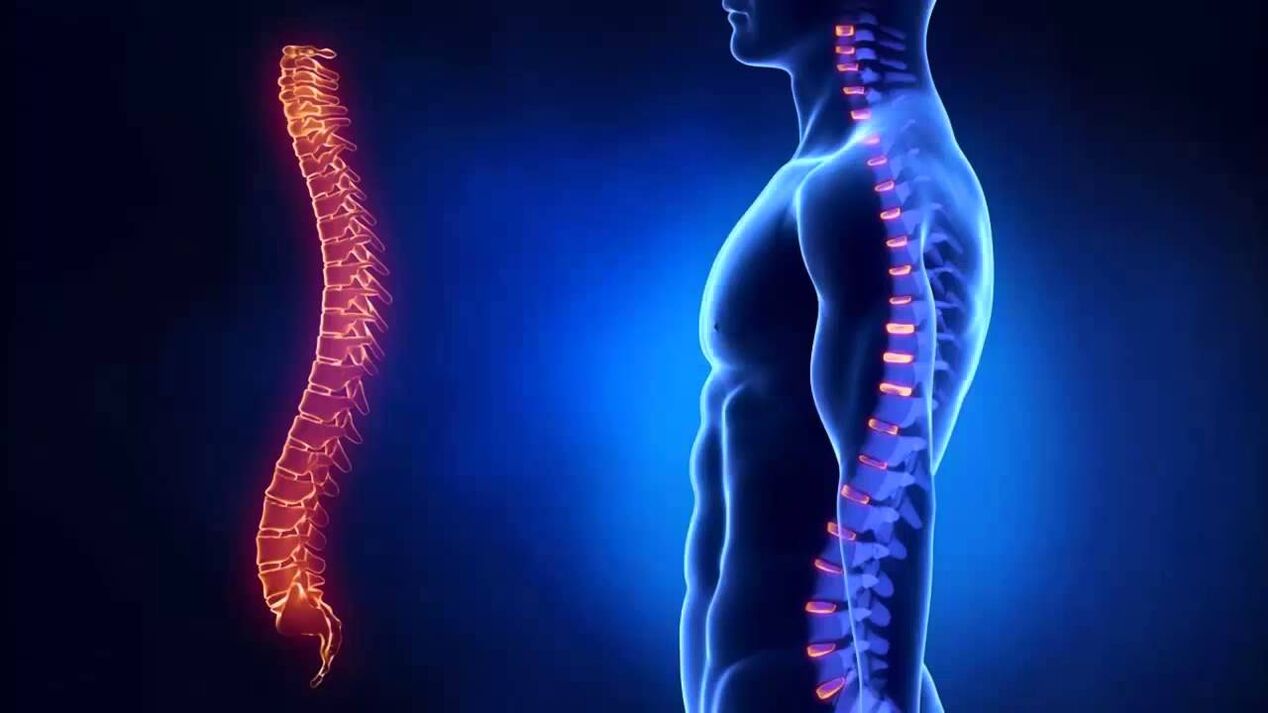
Concerning the location, osteochondrosis occurs:
- Cervical.Located in the cervical region.It is expressed by a dystrophic disorder of the discs and vertebrae of the neck, causing pain in the occipital and interscapular area.
- Chest.It occurs rarely and affects the thoracic vertebrae.Symptoms of manifestation are similar to neuralgic and cardiac pathologies.
- Lumbar.The most common type of disease, because the lower part of the spine experiences the maximum load.The disease begins with minor symptoms, which intensify as they progress.
According to clinical manifestations
As the extent of the pathology and the degree of damage to the intervertebral discs increases, 4 stages are distinguished, the characteristics of which are presented in the table:
| Scene | Demonstration | Treatment methods |
|---|---|---|
| I |
|
Special exercises |
| II |
|
Conservative therapy |
| III |
|
Surgical treatment |
| IV |
|
Hospitalized patient, surgical |
What are the symptoms of osteochondrosis?
Depending on the stage and cause of osteochondrosis, the patient will be concerned about the following signs:

- poor health, weakness, constant yawning;
- hearing and visual impairment;
- headaches and dizziness;
- loss of consciousness;
- runny nose, excess mucus or blood coming from the nose;
- snore;
- voice change;
- crumbling teeth;
- increase or decrease in blood pressure;
- dry mouth;
- numbness of the big toe;
- wandering pain in the spine.
Symptoms of the disease differ depending on the level of damage.If osteochondrosis of the cervical spine develops, the patient is bothered by shortness of breath.This is because the vagus nerve is irritated.I am concerned about the pain between the shoulder blades, discomfort when raising my arms, and the xiphoid process also hurts a lot.Osteochondrosis of the spine is expressed in impaired functions of the upper and lower extremities, wandering pains in the spine are worrying, the menstrual cycle is disrupted in women, and men suffer from impaired potency.
The signs of osteochondrosis are clearly pronounced, they cannot be ignored, because as chondrosis progresses, the symptoms will only intensify.If the disease is not treated in time, regardless of age, a person can remain disabled for life.
Why is it dangerous?
If acute osteochondrosis is not treated properly, complications can arise that can cause the patient to become disabled.If the causes of osteochondrosis have not been established and rapid progression is observed, a protrusion is formed, after which the annulus fibrosus ruptures and the formation of an intervertebral hernia occurs.Additionally, bony outgrowths of the vertebral bodies are observed.As a result of such disorders, the brain suffers and does not receive the necessary nutrition.This leads to pathological changes in blood pressure and lack of oxygen.If the disease was judged to be in an advanced stage, patients developed acute dysfunction of the heart muscle, breathing and swallowing.
Diagnosis

If you are concerned about serious signs of osteochondrosis, you should consult a doctor and undergo a diagnostic test.First of all, instrumental research methods are prescribed:
- x-ray;
- MRI;
- CT scan;
- Ultrasound with Doppler ultrasound;
- myelography.
How does the treatment take place?
Drugs
Osteochondrosis is curable, but only if the patient consults a doctor in the early stages.Otherwise, the pathology will constantly reappear, while medications will only bring temporary improvement.The treatment regimen for osteochondrosis consists of using:
- Non-steroidal anti-inflammatoriesor in other words, NSAIDs, which can help reduce pain and inflammation and lower body temperature.
- Chondroprotectors, which will help to reduce the process of destruction of cartilage tissue, in non-advanced cases, to restore it.
- Muscle relaxers, thanks to which it is possible to relieve muscle tone, which improves the patient's condition.
Lifestyle and diet
Treatment of osteochondrosis consists of following a healthy lifestyle, giving up bad habits and normalizing the diet.With this disorder, it is important to eat right, enrich the diet with calcium, iron, phosphorus, magnesium and B vitamins. It is worth monitoring your drinking regime and trying to drink at least 1.5 liters of plain water during the day.Thanks to the diet, it will be possible to stop the process of destruction of bone and cartilage tissues and improve the patient's condition.
Surgical treatment
If conservative treatment does not bring results, surgical intervention is prescribed to remove the intervertebral hernia.It is possible to remove the entire spinal disc and install an implant in its place.Thanks to such manipulations, it will be possible to restore the distance between the vertebrae and normalize the patient's condition.
Massage, acupuncture, exercise therapy
Thanks to massage, it will be possible to normalize muscle tone, eliminate acute symptoms and restore nutrition to cartilage tissue.Through acupuncture, the body's restorative and metabolic functions are stimulated, which reduces inflammation.Exercises help restore mobility to the spine, strengthen the muscle corset and normalize posture.
Folk remedies
The recipes are simple:
- Mix 1 tbsp.honey, 2 tbsp.radish juice, 100 ml of alcohol.Rub the affected areas 2 times a day.
- Add 1 tablespoon to 500 ml of alcohol.lilac inflorescences.Leave on for 10 days, then rub the product daily on the inflammatory areas.

Prevention
It is important to always monitor your health and consult a doctor at the first symptoms.To prevent the spine from getting injured and collapsing, you need to eat right, distribute the load evenly and avoid injuries and bruises.It is also recommended to engage in light sports, swimming, brisk walking and other physical activities that help strengthen the spinal muscles.